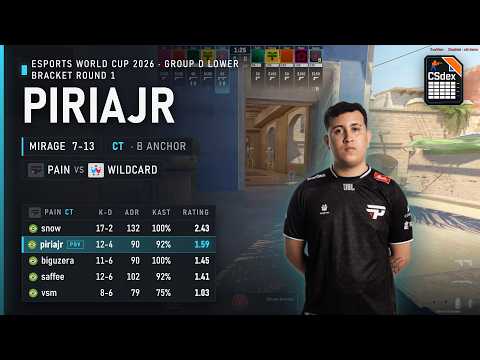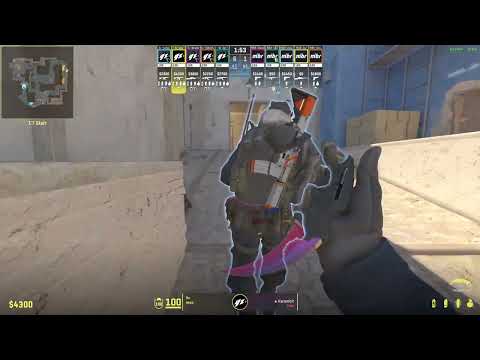
B Anchor
Usually starts around B Site, Bench, Van, Market or Short-side support positions. Can occasionally start closer to Catwalk or Underpass to support Mid fights, create false information or help the Short player before returning to B. The player in the role is about controlling isolation and timing: the B anchor can spend long stretches with no contact, but one bad position or wasted smoke can instantly turn Apartments into a free entry path. Utility discipline is critical to delay B hits, stop Apps bursts and buy enough time for Market rotations.
Archive
Role averages
- K/R
- 0.635
- D/R
- 0.591
- ADR
- 69.1
- KAST
- 74.7%
- Avg. |round swing|
- 4.761
About these averages
Metric: all archived map-side rows with the exact Mirage CT “B Anchor” label. Timeframe: 2024-12-18 to 2026-08-28. Sample: n=6,022.
Source: CSdex V1 aggregate performance archive. Fallback: no fuzzy role-label mapping. Risk: the average describes the archive, not the correct target for every team or round.
Pathings and possibilities for B starts
- Fight B Apartments with flash support to punish early T pressure or deny clean Apps control. (Aggressive)
- Hold B Site passively with anti-rush utility, strong positioning and crossfires. (Defensive)
- Support Short / Catwalk fights and rotate back into B according to information. (Situational)
Mid-round patterns
- Anchor B Site through strong positioning and utility usage while adapting to the amount of Apartments control Ts have taken. Set up with teammates when possible and decide whether to play close, Bench, Van, back site or Market-side depending on pressure and remaining utility. It works when information clearly points toward a B hit, advantage situations or rounds where the CT side wants to avoid unnecessary information plays.
- Play around Market / Short connection to stay linked with Mid while still being ready to fall back into B. This allows the anchor to support Catwalk pressure, react faster to B splits and help the Short player without fully abandoning the bombsite. The setup fits default rounds, retake-oriented setups or situations where the team needs stronger Mid-to-B flexibility.
- Maintain or re-clear Apartments control with utility and timing. This can deny late B hits, punish lurks, confirm that B is clear or allow the team to rotate extra players toward A. This makes sense when Ts are showing slow defaults, when B pressure has been low across the half or when the CT side needs extra information in disadvantage situations.