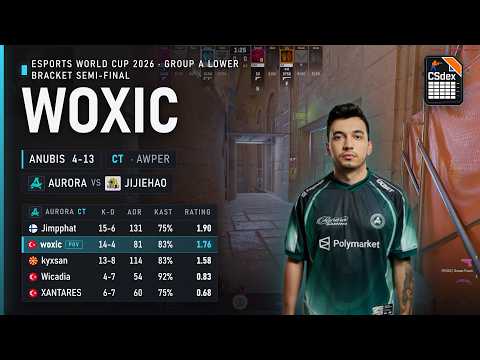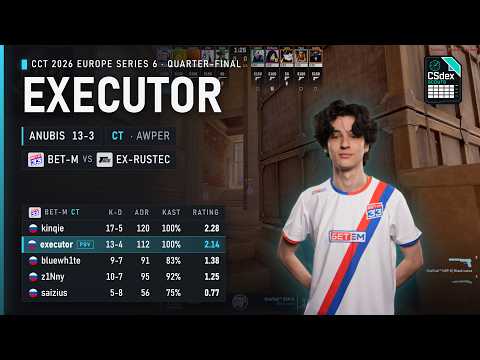
AWPer
Usually starts around Mid, Bridge, A Heaven, A Main angles, B Site lines, Water or Connector depending on spawn, opponent tendencies and the CT setup. Can change responsibilities with the Mid player, A Anchor, B Anchor or rotator between rounds, especially when the team wants early information, passive control or a strong first contact on one side of the map. In this slot, the player defines how much freedom Ts have to take Mid, Water and site entrances: the AWPer can slow the default without needing to overfight every round.
Archive
Role averages
- K/R
- 0.745
- D/R
- 0.615
- ADR
- 74.9
- KAST
- 73.5%
- Avg. |round swing|
- 5.056
About these averages
Metric: all archived map-side rows with the exact Anubis CT “Awper” label. Timeframe: 2024-12-18 to 2026-08-28. Sample: n=1,539.
Source: CSdex V1 aggregate performance archive. Fallback: no fuzzy role-label mapping. Risk: the average describes the archive, not the correct target for every team or round.
Pathings and possibilities from starting Mid / Bridge
- Fight Mid / Bridge with teammate utility to deny early control. (Aggressive)
- Hold passive Mid angles to gather information and punish slow defaults. (Defensive)
- Reposition toward A, B, Water or Connector according to pressure. (Situational)
Pathings and possibilities from starting site-side positions
- Hold A Main or B Main angles to stop early pressure
- Support anchors with long-range contact and safe fallback routes
- Rotate through Connector / Heaven paths when the round shifts
Mid-round patterns
- Control Mid or Water with the AWP, making it difficult for Ts to walk into map control for free. Decide whether to fight, fall back or reposition according to utility and teammate spacing. This makes sense when the CT side wants early information, strong map control or a first-pick opportunity.
- Support a bombsite from deeper AWP lines, helping anchors survive pressure without giving Ts an easy trade. The goal is often to delay, punish the plant path or force Ts to clear uncomfortable angles before committing. The setup fits when information points toward a site hit, when the CT side is playing retake-oriented or when utility has forced the AWPer back.
- Reposition constantly after contact, avoiding predictable angles and forcing Ts to spend utility clearing the next line. This keeps the AWP relevant even without an opening kill, because the threat itself can slow the round and delay executes. The pattern fits slow defaults, late-round situations or rounds where the AWPer needs to create pressure without taking unnecessary risks.