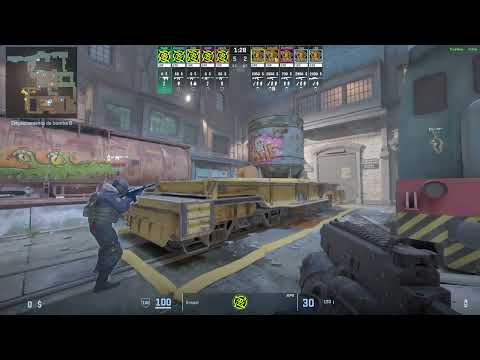
CTTrain
A Popdog
Usually starts around Popdog and the adjacent A-site train lanes. The assignment controls the ladder drop, supports outer-yard fights and provides a short route between information and impact. Sound can arrive before vision, so the player must separate a real drop from pressure designed to hold the position while Ts work T Main or Ivy.
Archive
Role averages
- K/R
- 0.747
- D/R
- 0.648
- ADR
- 81.7
- KAST
- 75.8%
- Avg. |round swing|
- 4.742
About these averages
Metric: all archived map-side rows with the exact Train CT “A Popdog” label. Timeframe: 2024-12-18 to 2026-08-28. Sample: n=1,532.
Source: CSdex V1 aggregate performance archive. Fallback: no fuzzy role-label mapping. Risk: the average describes the archive, not the correct target for every team or round.
Opening options
- Challenge the ladder room or punish a fast drop with teammate utility and a planned escape (Aggressive)
- Hold a close Popdog denial angle while another defender watches the wider A lanes (Defensive)
- Start on the site, keep Popdog under observation and activate only after sound, utility or a teammate call confirms the timing (Situational)
Mid-round decisions
- If Popdog stays quiet, do not abandon it without a handoff. A late drop can cut rotations, split the site and turn the T Main defenders away from their first contact.
- When A pressure builds elsewhere, use Popdog as a support position: flash, trade or deny the drop while keeping the player hard to isolate from T Main.
- If the ladder is lost, fall into a crossfire that watches the exit rather than trying to recover the room alone. The narrow route favors a prepared defender, not a blind climb or re-peek.
What breaks the structure
- Leaving Popdog on a vague read and giving Ts a free central timing
- Playing so deep inside the room that T Main pressure removes every safe exit
What to study in the POV
- How sound, radar and teammate contact change the player's attention
- The spacing between the Popdog defender and the outer-yard rifles
- When the player holds the ladder, fights through it or gives it up for a stronger site layer