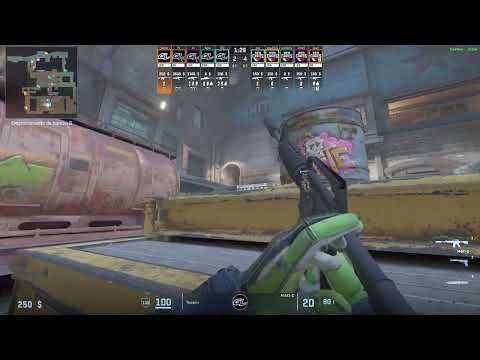
CTTrain
B Anchor
Usually starts around the B trains, the upper and lower entrances, Oil, Back Site or a Connector-facing fallback. The B anchor must read two heights, delay the plant route and survive long enough for rotations to cross a difficult site. Early utility can stop a rush, but using it without a cue leaves the anchor exposed to the late contact rounds that Train encourages.
Archive
Role averages
- K/R
- 0.709
- D/R
- 0.595
- ADR
- 79.7
- KAST
- 75.7%
- Avg. |round swing|
- 5.157
About these averages
Metric: all archived map-side rows with the exact Train CT “B Anchor” label. Timeframe: 2024-12-18 to 2026-08-28. Sample: n=1,497.
Source: CSdex V1 aggregate performance archive. Fallback: no fuzzy role-label mapping. Risk: the average describes the archive, not the correct target for every team or round.
Opening options
- Contest an upper or lower approach with supported utility and take a duel before the attackers can fan out (Aggressive)
- Hold a layered site angle, preserve the escape route and force Ts to clear vertical and train-side positions under time pressure (Defensive)
- Play for information from a safer depth and adjust toward upper, lower or Connector according to sound and teammate control (Situational)
Mid-round decisions
- Keep both B entrances in the call even when only one shows pressure. A split-second handoff between upper and lower can decide whether the first attacker reaches a plant lane untouched.
- When B is quiet, resist the unsupported information peek. If the team needs a re-clear, pair it with a flash, a second player or a rotation plan that still covers the site.
- During the hit, break the attackers' spacing with utility, take a duel tied to a fallback and tell the rotators which plant and post-plant positions remain possible.
What breaks the structure
- Spending all stall utility on early noise and leaving no answer for the final B commitment
- Hiding in a position that cannot see the plant, be traded by a rotator or exit into the retake
What to study in the POV
- How the player divides attention between upper, lower and Connector
- The utility sequence used to buy rotation time
- Where the anchor falls after first contact and how that position supports the retake